This is life before the story asks anything of anyone.
How to get started
Start Your Film Journey
Every film is a journey with clear turning points. Someone lives in a familiar world. Something disrupts it. They cannot go back. They choose. The world is different when the lights come up.
You do not need a finished manuscript to begin. A small idea — what happens, who it is about, what goes wrong — is enough. We walk one question at a time, then Produce Manus writes the short film from that seed.
DirectorsCut helps you build your film from the story spine, not from random clips.
How it works
The film timeline
From a small idea to a finished cut. You do not skip ahead to clips. Each stop on this line feeds the next — manuscript names the beats, storyboard shows them, clips move, Assemble stitches the movie.
- 01Small ideaOne sentence you actually want to tell. Who, where, and the first thing that goes wrong.
- 02ManuscriptProduce Manus expands that seed into a script on the seven-point spine.
- 03Plotpoints → ScenesEach turning point becomes 1–4 shootable scenes. A short film stays small.
- 04StoryboardSeedream 5.0 stills for every beat — see the whole film before anyone moves.
- 05ClipsSeedance 2.5 turns each frame into a clip on Storyboard or Takes. Generate, re-roll, approve.
- 06AssembleApproved clips land on a timeline and stitch into the finished film.
How to start
How to make a movie from script to final cut
The best films spent years on the manuscript. There is real work to do — and to think through — before you generate a single clip. DirectorsCut is that path, from idea to locked identities, storyboard, render, and the final cut.
Do not start by asking AI for random shots. Lock the idea, the people, the rooms, and the shots. Then the pictures can stay the same film all the way to the master.
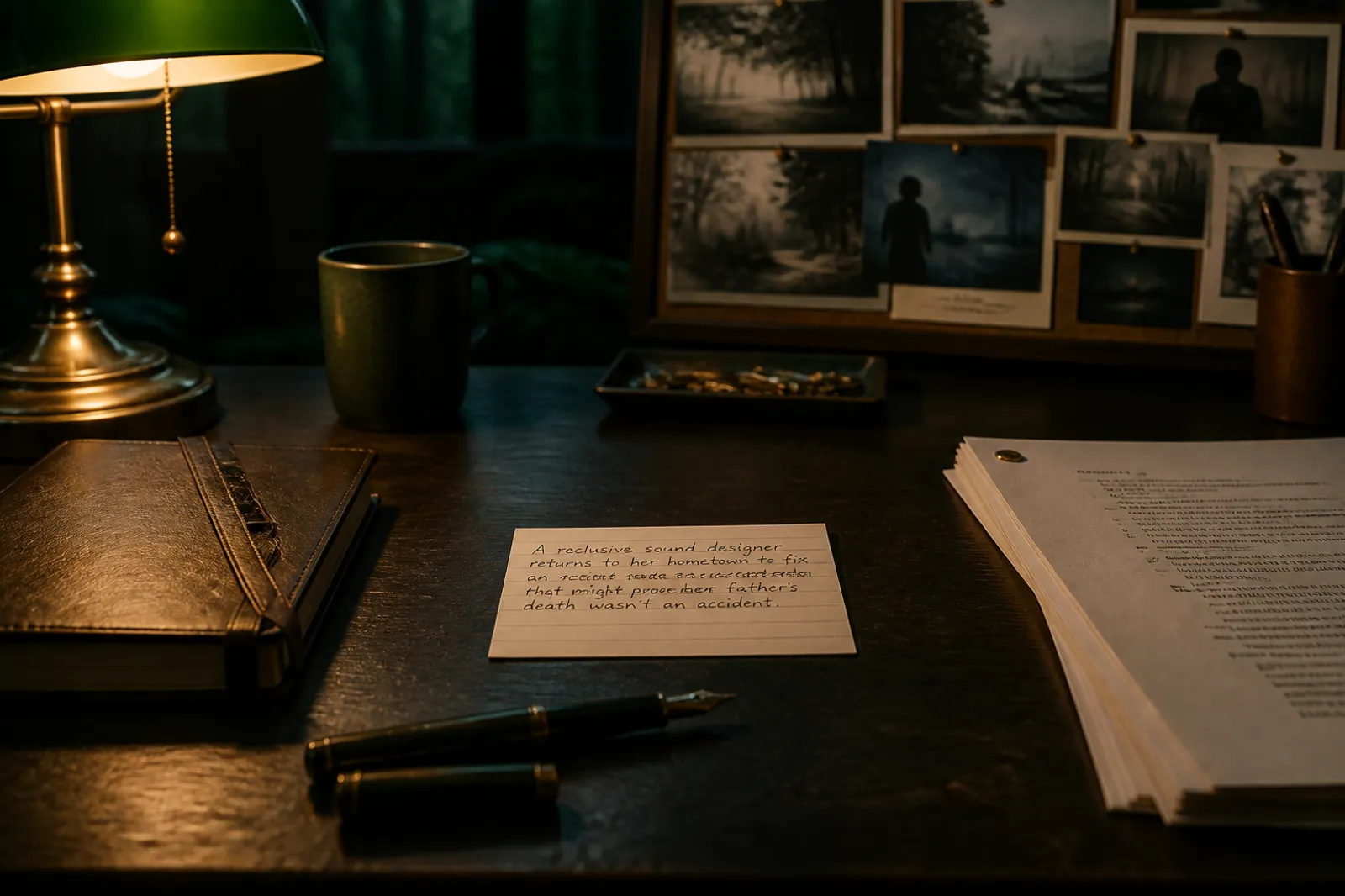 01 Idea & conceptWriter's table: one sentence on paper, genre and tone locked before any camera.
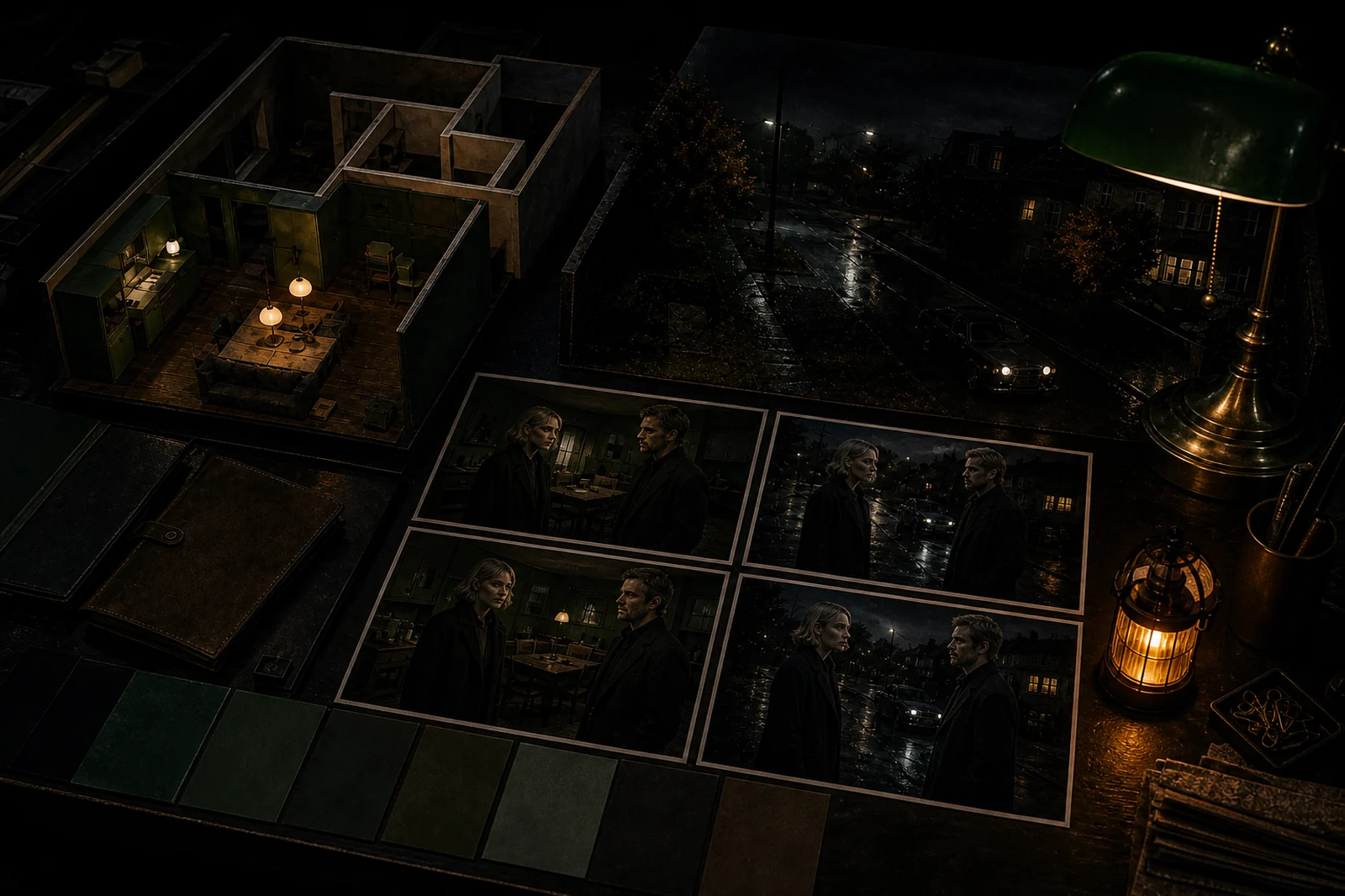 04 Universe & environmentsLocation bible: interiors, exteriors, night streets, and a locked forest-green palette.
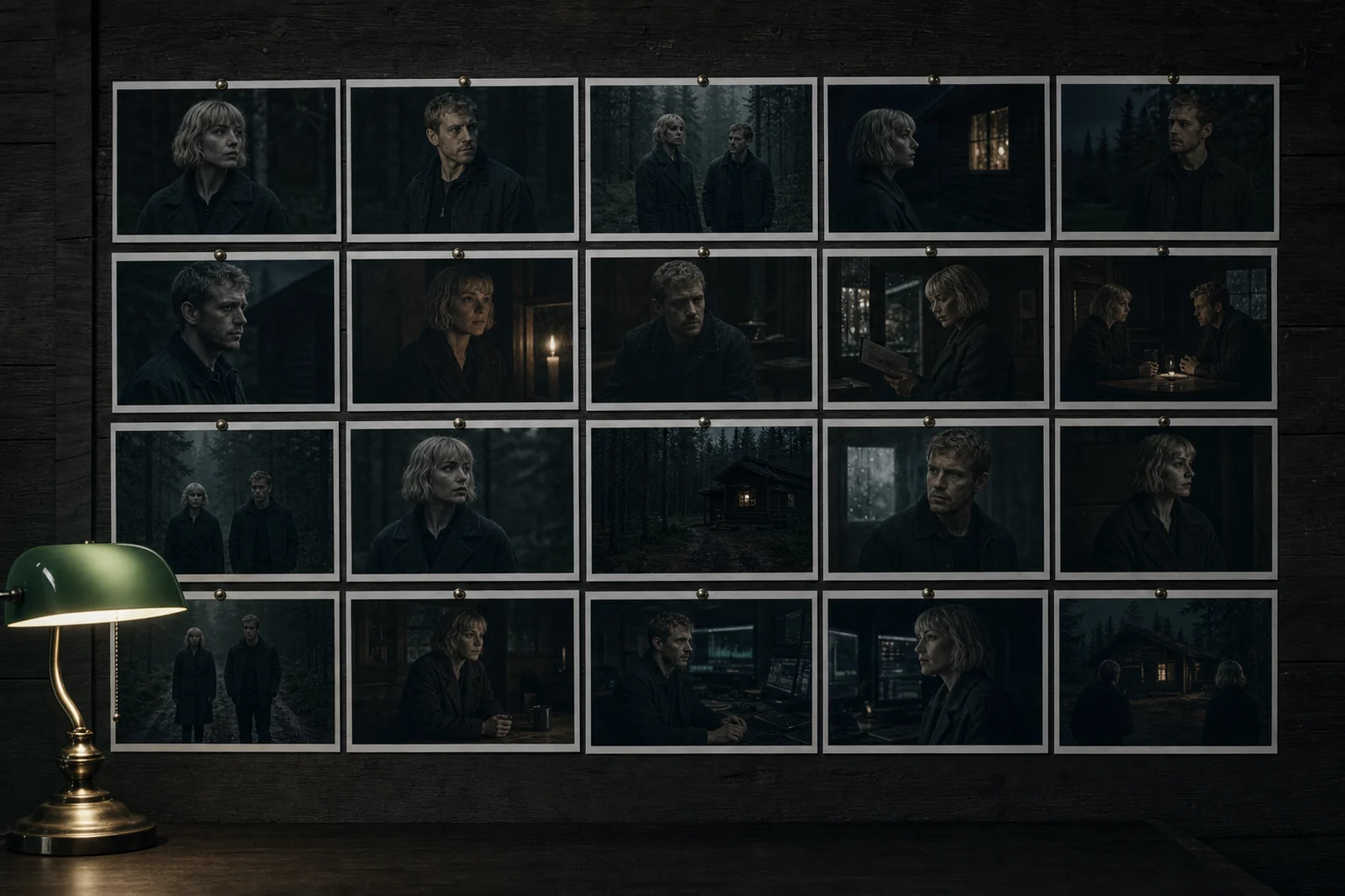 07 StoryboardVisual contract: one still per shot, checked for faces, light, and rooms before motion.
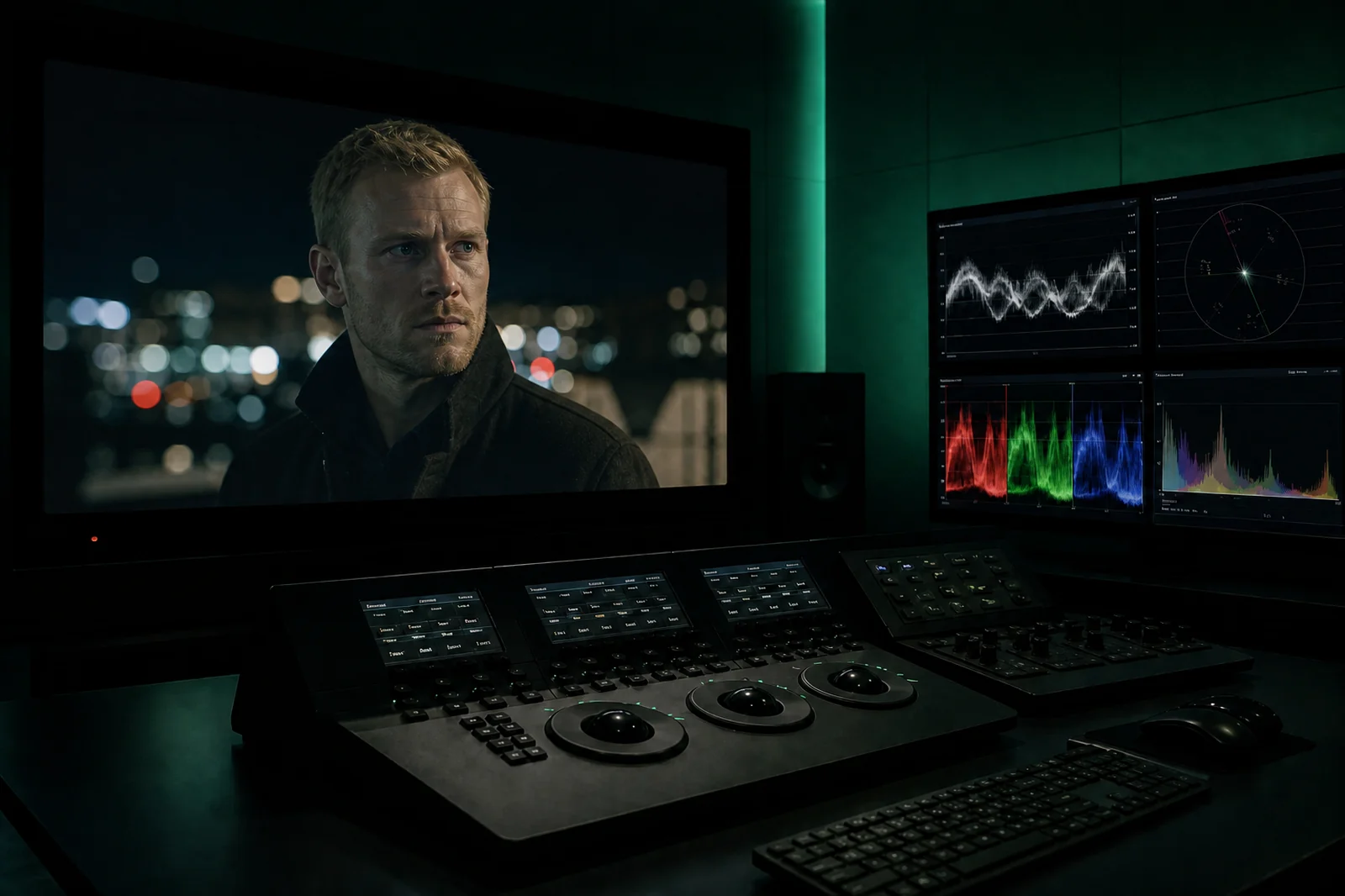 10 Final cutGrading suite: one timeline, transitions, mix, color pass, last continuity check, master out.
Start here
You do not need a manuscript.
Bring a story you actually want to tell. One sentence is enough. We ask one question at a time, then Manuscript turns it into a short film you can Produce.
Saved as a 3-minute short. No idea yet.
Watch the pipeline
Watch the Journey in 30 Seconds
Watch how a film moves from plotpoints → storyboard → clips → final cut.
Before the first turn
Ordinary World
This is life before the story asks anything of anyone.
Before the journey starts, we need to feel what “normal” looks like — the routines, the relationships, the quiet limits. DirectorsCut does not shoot this as a long prologue. It is the ground the Inciting Incident stands on. When you write What is normal on Manuscript, you are sketching this world so the first disruption can land.
For exampleA weatherman does the same broadcast, in the same town, as if tomorrow will behave.
The seven turning points
The Story Spine Explained
These are the beats every DirectorsCut film rides — from the first disruption to the new normal. Each snippet below also appears as a popup inside Manuscript and Storyboard, so the lesson stays with you while you work. Walk them in the idea box above if you want to steer them yourself. Otherwise Produce Manus writes them from your small idea, and Manuscript lets you edit one field at a time.
01Ordinary WorldBefore the knock 02Inciting IncidentThe first knock The moment normal life is disrupted.
03Break into Act 2Turning Point The event that forces the protagonist into a new world.
04MidpointThe turn inside the turn A revelation or reversal that changes what the story is really about.
05Point of No Return / Low PointAll is lost The moment where going back is impossible and everything seems lost.
06Break into Act 3The last attempt The decision to confront the problem and move toward resolution.
07ClimaxThe answer The decisive confrontation or choice that resolves the main conflict.
08New EquilibriumThe new normal The transformed state after the climax.
01
Inciting Incident
The first knock
The moment normal life is disrupted.
This is when the story begins — not the opening shot, the event the protagonist cannot shrug off. After this, the old day no longer fits.
For exampleA blizzard traps Phil in the town — he cannot ignore it.
02
Break into Act 2
Turning Point
The event that forces the protagonist into a new world.
Find the New World first — where they have arrived — then work backwards to the cause. That cause is Plot Point I. Refusal is no longer possible. The door behind them has closed.
For exampleNeo swallows the red pill. He does not wake up in the life he knew.
03
Midpoint
The turn inside the turn
A revelation or reversal that changes what the story is really about.
Halfway through, the film shows its true subject. A secret lands, a plan fails, a belief cracks. After this, the story should feel more urgent — not just longer.
For exampleA toy built to believe he is a hero learns he is a toy. The game is no longer play. It is identity.
04
Point of No Return / Low Point
All is lost
The moment where going back is impossible and everything seems lost.
Break into Act 2 locked the door. The Low Point takes the floor out. The old plan is dead. From here the protagonist must invent a last attempt — or stay in the wreckage.
For exampleLuke returns to a farm that is no longer a home. There is no ordinary life waiting.
05
Break into Act 3
The last attempt
The decision to confront the problem and move toward resolution.
Grief becomes a plan. The protagonist stops circling the wound and walks toward the thing that must be faced. The audience should be able to name that plan in one sentence.
For exampleA crew that has been surviving decides, together, to go back in.
06
Climax
The answer
The decisive confrontation or choice that resolves the main conflict.
Not more action for its own sake — the dramatic question, answered. Stay or leave. Tell the truth or keep the lie. Save them or save yourself. The camera should know which choice we are watching.
For exampleA father sits in a car outside a house and does not go in. Or he does. Either way, the question ends.
07
New Equilibrium
The new normal
The transformed state after the climax.
We do not return to the Ordinary World. We return to a version of it that has been changed by what happened. This is the image the audience leaves with — quieter than the climax, and more true.
For exampleThe same kitchen. Different light. Someone who used to wait is the one who stays.
Choose a finish
Fast Lane or Advanced
Same manuscript. Two finishes. Fast Lane is the film. Advanced is the craft department around that film.
Fast Lane — three film steps
Manuscript writes the spine. Storyboard turns each plotpoint into stills, then clips. Assemble stitches the approved clips. Skip Production, Studio, and Archive as extra rooms — they split one finish into three names.
Advanced — Hollywood departments
After the same manuscript: Characters, Props, Environments, Timeline, Shot List, Studio (cut), Render Queue, then Assemble and Export. Use this when faces, places, or the edit need a dedicated pass.
AI craft on each step cites the same books Manuscript teaches: want, obstacle, cost, because-of-that, new ordinary. A good film product is a spine you can still see after the clips move.
The pipeline
How DirectorsCut Builds Films
You do not start by generating clips and hoping they become a movie. You write the spine. DirectorsCut turns each turning point into pictures, then into motion, then into a cut.
- 01
Manuscript
You write your story using the story spine. One beat at a time: what disrupts, what forces the new world, what is lost, what is chosen.
- 02
Plotpoints → Scenes
DirectorsCut converts each plotpoint into 1–4 scenes. A short film stays small. A longer film simply asks for more beats on the same spine.
- 03
Storyboard
Seedream 5.0 generates visual storyboard frames for each scene — the emotional beat, the camera, the place, the people — so you can see the whole film before anyone moves.
- 04
Video Clips
Seedance 2.5 brings each storyboard frame to life as a 30-second clip. You generate, re-roll, and approve from the same cards.
- 05
Assembly
Approved clips are stitched into a finished film. The storyboard remains the map. The cut is the journey you kept.
Storyboard frames come first, clips come second — this keeps your film coherent.
Cause, then effect
Why Turning Points Matter
Turning points are not labels on a wall. They are the drivers that generate your storyboard images. If the beat is wrong, the picture will be pretty and the film will feel lost.
Cause
Plotpoint
Effect
Act 2 entry or the next major beat
DirectorsCut uses cause → effect, the way editors find Plot Point I on a finished film. Look at where the character has arrived — the New World, the next major beat — then ask what event made that arrival unavoidable.
Cause is the plotpoint you write. Effect is the world they enter next. A storyboard frame must visually reflect the emotional beat of that plotpoint: the blizzard, the pill, the burned farm — not a generic pretty wide.
Learn the path once
Recommended First Project
Start with a short film (2–3 minutes).
- Fewer scenes — you can hold the whole spine in your head.
- Faster feedback — Produce Manus, see the board, generate a handful of clips.
- Easier to understand the pipeline — Manuscript → Storyboard → Assemble, once, without getting lost.
- Perfect for learning the storyboard → clip workflow before you attempt a novella or a feature.
Micro-guidance
Tooltips & Popups
These short lines appear beside the tools — a pocket tutor, not a lecture.
On Manuscript
This is your Inciting Incident — the moment the story begins.
Break into Act 2: The event that forces your character into a new world.
On Storyboard
This frame belongs to the Turning Point — show the moment everything changes.
Generate clip starts Seedance 2.5 on this card. The video appears here — not in Express Quick Clip.
On Production
These jobs are your scenes in motion — approve them to build your final film.
Your Film Starts Here
You do not need a finished script. You need one sentence and the first knock on the Ordinary World.
Start with the moment everything changes — then Produce Manus expands it.